If you are shopping for a custom home lot in Dripping Springs, the view can be the easy part. The harder question is whether the land will actually support the home you want to build, on the timeline and budget you expect. In a fast-growing Hill Country market, lot selection is less about raw acreage and more about utilities, access, drainage, and approvals. Let’s dive in.
Why lot evaluation matters in Dripping Springs
Dripping Springs is a growing Hill Country community, and that growth has put added pressure on infrastructure, transportation, recreation, and overall quality of life according to the city’s development materials. That matters because two lots that look similar on paper can have very different utility options and review requirements.
Location within the city limits, the ETJ, or unincorporated Hays County can change the process in a big way. The city notes that ETJ and city-limit boundaries should be verified with city representatives, so you do not want to rely on a map alone when making a purchase decision.
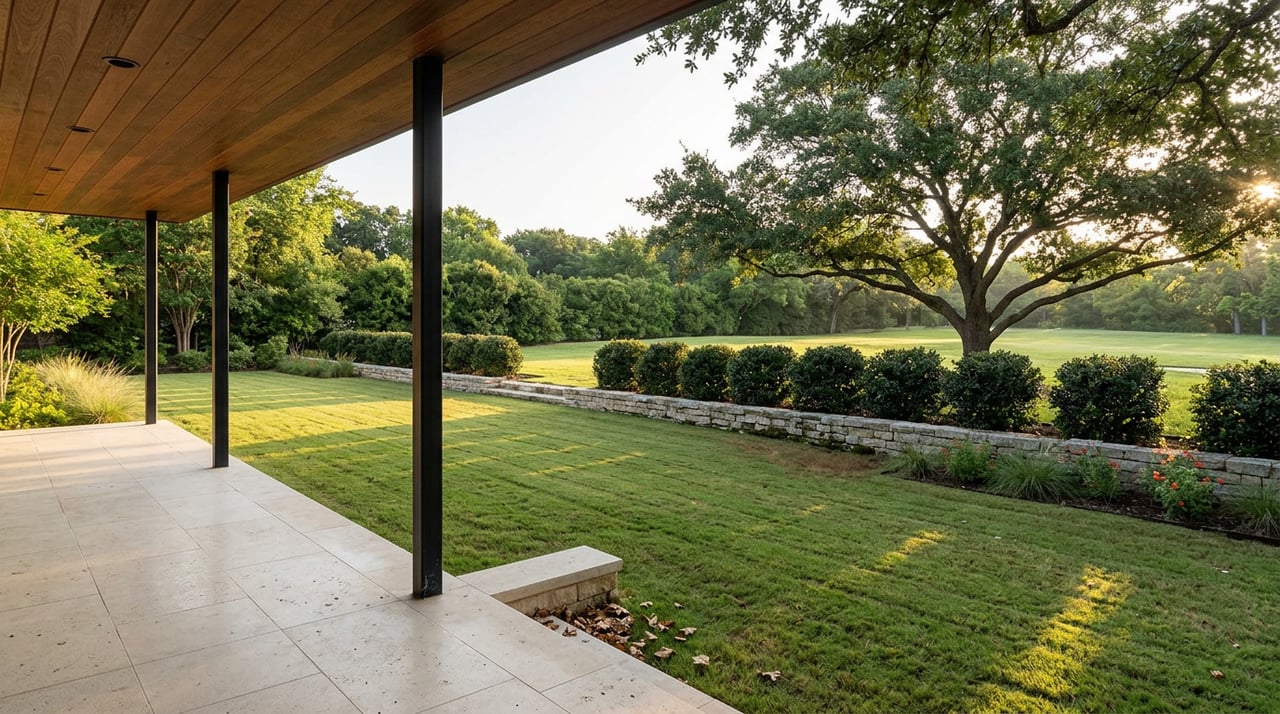
The land itself also plays a major role. Dripping Springs is known for rolling hills, limestone ledges, rock-bottomed streams, and long views, which can make a site beautiful but more complex to build on than a flatter parcel in another market.
Start with jurisdiction and plat status
Before you evaluate design ideas, confirm where the lot falls legally. Is it inside city limits, in the city’s ETJ, or in unincorporated Hays County? That answer affects who reviews the property and which permits may apply.
Next, confirm whether the parcel is already platted or if it is still considered raw land. Hays County says raw land may require a plat application, and if a property is not compliant with current county and state regulations, it may not receive approvals for development, septic, or driveway permits.
This is one of the biggest reasons buyers should treat lot shopping like due diligence, not just discovery. A parcel can look appealing online and still require significant time, engineering, or approvals before construction can begin.
Utilities can make or break a lot
Wastewater is not a given
Many buyers assume sewer service will be available if a lot is near existing homes. In Dripping Springs, that assumption can be risky. The City of Dripping Springs says it manages wastewater infrastructure for properties inside city limits and select subdivisions under development agreements, but its wastewater system is currently at full capacity and cannot accept new wastewater service connections.
That means you should get written confirmation of sewer availability before treating a lot as sewer-served. Without that confirmation, your building plans may need to shift toward septic if the property qualifies.
Water service varies by area
Water service is also not one-size-fits-all. Dripping Springs Water Supply Corp. says it operates groundwater wells and also receives treated raw water through a contract path with LCRA and West Travis County PUA, but service and restrictions can vary by subdivision and provider context.
The utility also posts drought-related irrigation restrictions. If your vision includes extensive landscaping, a large lawn, or water-intensive outdoor features, it is smart to factor possible watering limits into the long-term usability of the lot.
Septic suitability must be proven
If the lot will need an on-site sewage facility, the land has to support it. TCEQ requires septic systems to be designed from a site evaluation that accounts for local conditions, and Hays County requires a septic permit for all OSSFs regardless of lot size or acreage.
That site work is not optional. The county also says a permit will not be issued if the tract violates county subdivision regulations, so septic feasibility and legal parcel status need to be reviewed together.
Wells have their own rules
If water service is not available and the lot may need a well, the groundwater district becomes part of your evaluation. Hays Trinity Groundwater Conservation District says a well construction notification confirmation is required before drilling begins.
The district also states that it will not accept new well construction notifications for non-exempt uses during Stage 3 or Stage 4 drought conditions. In some cases, you may also need to verify whether the parcel falls within the Jacobs Well Groundwater Management Zone or another special management area.
Site conditions can change the true cost
Floodplain and drainage matter early
A lot with strong views can still come with drainage challenges. FEMA flood maps are the standard first check for flood exposure, and Hays County says all development inside or outside the mapped floodplain requires a county permit.
The county defines development broadly. It includes houses, pools, sheds, slabs and foundations, fill, clearing, and roadways, which means floodplain and drainage review can affect much more than the house footprint.
Topography affects design and budget
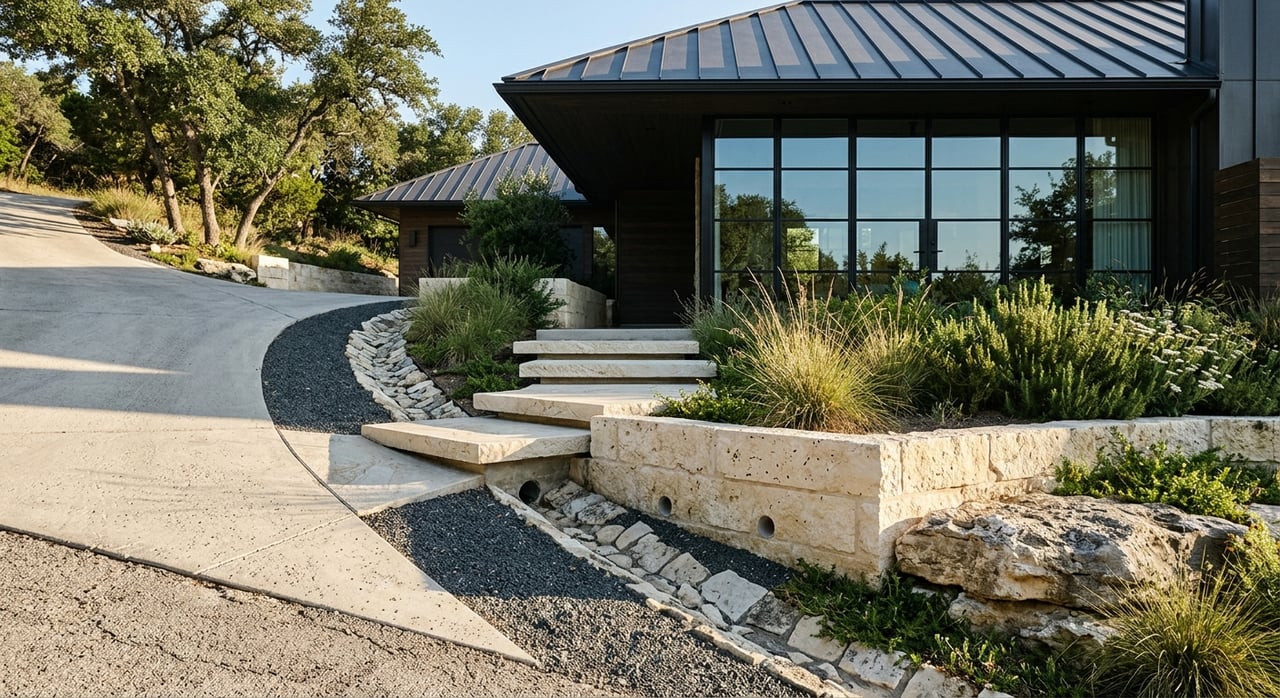
In Dripping Springs, slope is often part of the appeal. But hillside terrain can also affect grading, retaining needs, foundation design, driveway layout, and stormwater planning.
A lot that looks like a bargain upfront may cost more once you account for excavation, drainage improvements, or the need to position the home differently than you first imagined. That is why buildability should always be weighed alongside price per acre.
Trees may influence layout
If the property is inside city limits, Dripping Springs has a landscape and tree preservation ordinance that regulates tree preservation, drought-tolerant plant selection, and drip-irrigation incentives. Mature trees can be a major asset, but they can also affect where the house, driveway, and outdoor improvements can go.
For custom-home buyers, this is important because the lot’s most attractive features can shape both design freedom and site costs. A beautiful stand of trees may be worth preserving, but it should be evaluated with your builder and site professionals before you finalize a plan.
Access and addressing are part of buildability
A lot is not truly ready to build on just because you can drive to it. Hays County says driveway and utility permits may be required in county right-of-way, and its road inspections process also covers new road and road-bridge work in some cases.
The county also says habitable structures must have a 9-1-1 address, and the plat should outline access and utility information. That makes access more than a convenience issue. It is a legal and practical part of determining whether your project can move forward smoothly.
Questions to answer before you close
Before you commit to a custom lot in Dripping Springs, try to answer these questions in writing whenever possible:
- Is the parcel inside city limits, the ETJ, or unincorporated Hays County?
- Is the lot already platted, or will additional subdivision work be needed?
- Is sewer service actually available, or will the home need septic?
- If septic is needed, has the site been evaluated for OSSF suitability?
- Is public water available, or will a well be required?
- If a well is needed, what groundwater district rules apply right now?
- Does the lot have floodplain exposure, drainage constraints, or clearing issues?
- What permits may be required for driveways, utilities, or county right-of-way work?
- Does the topography support the home design you want without major extra cost?
These are not small details. In Dripping Springs, they are often the difference between a straightforward custom build and an expensive learning curve.
A smarter way to compare lots
When buyers compare lots, they often start with acreage, views, and price. Those are important, but they should not be the only filters. In this market, a smaller parcel with clearer utility access and fewer build constraints can be a better long-term fit than a larger tract with unresolved questions.
A practical comparison process usually looks like this:
- Verify jurisdiction with the city or county.
- Confirm plat status and legal compliance.
- Check sewer, water, septic, or well feasibility.
- Review floodplain, drainage, slope, and tree constraints.
- Confirm access, addressing, and permit requirements.
- Compare the likely site-prep and infrastructure costs, not just the purchase price.
That approach helps you evaluate the real cost to build, not just the cost to buy. It also gives you a stronger position when deciding whether a lot is worth pursuing, renegotiating, or passing on.
Why local guidance matters
Custom lots in Dripping Springs can offer privacy, views, and the flexibility to create something highly personal. They can also involve layered due diligence that is easy to underestimate if you are not familiar with how city, county, utility, and groundwater rules intersect.
That is where experienced local guidance becomes valuable. When you approach lot selection with a clear process and the right professionals, you can avoid costly surprises and focus on finding land that truly supports your goals.
If you are considering a custom home lot in Dripping Springs or elsewhere in the Hill Country, Jana Birdwell can help you evaluate the opportunity with a strategic, relationship-first approach grounded in local market knowledge.
FAQs
What should you verify first when evaluating a custom home lot in Dripping Springs?
- Start by confirming whether the lot is inside Dripping Springs city limits, in the ETJ, or in unincorporated Hays County, because that affects review processes, permits, and utility assumptions.
Can a Dripping Springs lot automatically connect to city sewer?
- No. The City of Dripping Springs says its wastewater system is currently at full capacity and cannot accept new wastewater service connections, so sewer availability should be confirmed in writing.
What if a Dripping Springs lot needs a septic system?
- The site must be evaluated for local conditions, and Hays County requires an OSSF permit for all septic systems regardless of lot size or acreage.
Can you drill a water well on any custom lot in Dripping Springs?
- Not automatically. Hays Trinity Groundwater Conservation District requires well construction notification confirmation before drilling, and some new non-exempt well notifications may be paused during certain drought stages.
Do floodplain and drainage issues matter for custom lots in Hays County?
- Yes. Hays County requires development permits broadly, and floodplain or drainage conditions can affect home placement, site work, and total build cost.
Why can two nearby lots in Dripping Springs have different buildability?
- Because nearby parcels may fall under different jurisdictions, plat status, utility options, access conditions, and drainage realities, even if they appear similar at first glance.