Looking at homes in Bryker Woods, you may notice something right away: the neighborhood does not follow just one architectural script. A cottage with a porch, a low-slung ranch, and a newer modern home can all feel at home on the same block. If you are buying, selling, or planning updates here, understanding that mix can help you read the neighborhood more clearly and make better real estate decisions. Let’s dive in.
Why Bryker Woods Feels Architecturally Layered
Bryker Woods developed over time, not as one single subdivision built all at once. According to the Bryker Woods Neighborhood Association, its history reaches back to the 1886 William Thiele subdivision, with added plats in the 1920s and 1930s and the first Bryker Woods plat appearing in 1936. More sections were added through the 1950s, which helps explain why the neighborhood feels varied rather than uniform.
That gradual growth shows up in the street character today. Bryker Woods is known for mostly small single-family homes, mature trees, access to parks and greenbelt areas, and a streetscape shaped by porches, open yards, and modest setbacks. The city survey also notes a slightly curving grid, small medians along Beverly Road and Bryker Drive, and land that slopes toward Shoal Creek.
In other words, the neighborhood’s identity comes from more than the houses alone. The trees, spacing between homes, porch presence, and overall scale are a big part of what makes Bryker Woods feel distinct.
Classic Bryker Woods Architecture
Many of the older homes in Bryker Woods are best understood as cottage-scale houses. The neighborhood association’s historic review committee describes asymmetrical Colonial Revival as the dominant named style, while also emphasizing features like front porches, hipped or gabled roofs, mostly wood double-hung windows, and restrained ornament.
That helps explain why so many homes here feel approachable and neighborly. They are often compact in scale, visually balanced, and designed to engage the street rather than dominate it. Even when details vary, the overall feel tends to stay modest and cohesive.
Bungalow and Craftsman Homes
Bungalow and Craftsman homes are part of Bryker Woods’ architectural vocabulary. These homes are typically one story, with low-pitched roofs, broad overhanging eaves, and porch-centered layouts. The city survey also points to compact, efficient interior plans, which fits the smaller-scale character seen in many older central Austin homes.
For buyers, these homes often appeal because of their warmth and practical layout. For sellers, original rooflines, porch form, and window patterns can play a major role in how the home is perceived from the street.
Colonial Revival Influence
Colonial Revival is one of the clearest classic influences in Bryker Woods. This style is associated with symmetry, hipped or intersecting roofs, thin columns or pilasters, decorative window elements, and a pronounced front porch.
In Bryker Woods, that style often appears in a scaled-down, less formal way. Instead of feeling grand, many homes read as comfortable and familiar, which is part of the neighborhood’s enduring appeal.
Minimal Traditional Homes
Minimal Traditional homes also appear throughout the neighborhood, especially in postwar development. These homes are typically simpler in detail than earlier revival styles, but they still fit the neighborhood’s emphasis on modest scale and compatibility.
If you are comparing homes in Bryker Woods, this is one reason two houses from different decades can still feel visually connected. The details may change, but the size, massing, and relationship to the street often remain in step.
Ranch Homes Added a Postwar Shift
The city survey shows that Bryker Woods saw much of its development between 1935 and 1959, with a broader primary construction period from 1913 to 1973. That wide range helps explain why the neighborhood can feel both early-suburban and postwar at the same time.
Postwar homes in Bryker Woods tend to move toward Ranch and Minimal Traditional forms. Ranch houses are generally long and low, with open living and dining areas, lots of glass, and a stronger connection to patios or rear yards. Warm-climate examples often include an attached garage or carport.
This created a different kind of living experience from the earlier cottages and bungalows. Ranch homes often feel more casual, more indoor-outdoor, and more oriented toward backyard living.
How Modern Homes Fit In
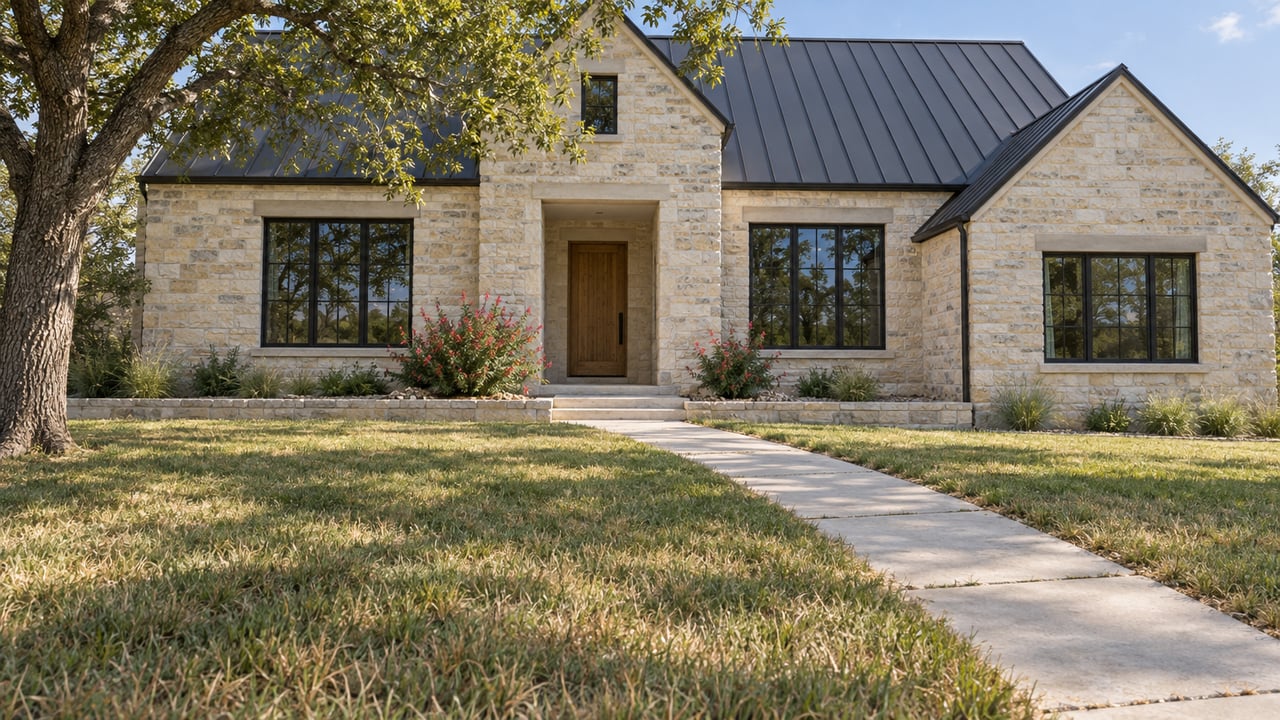
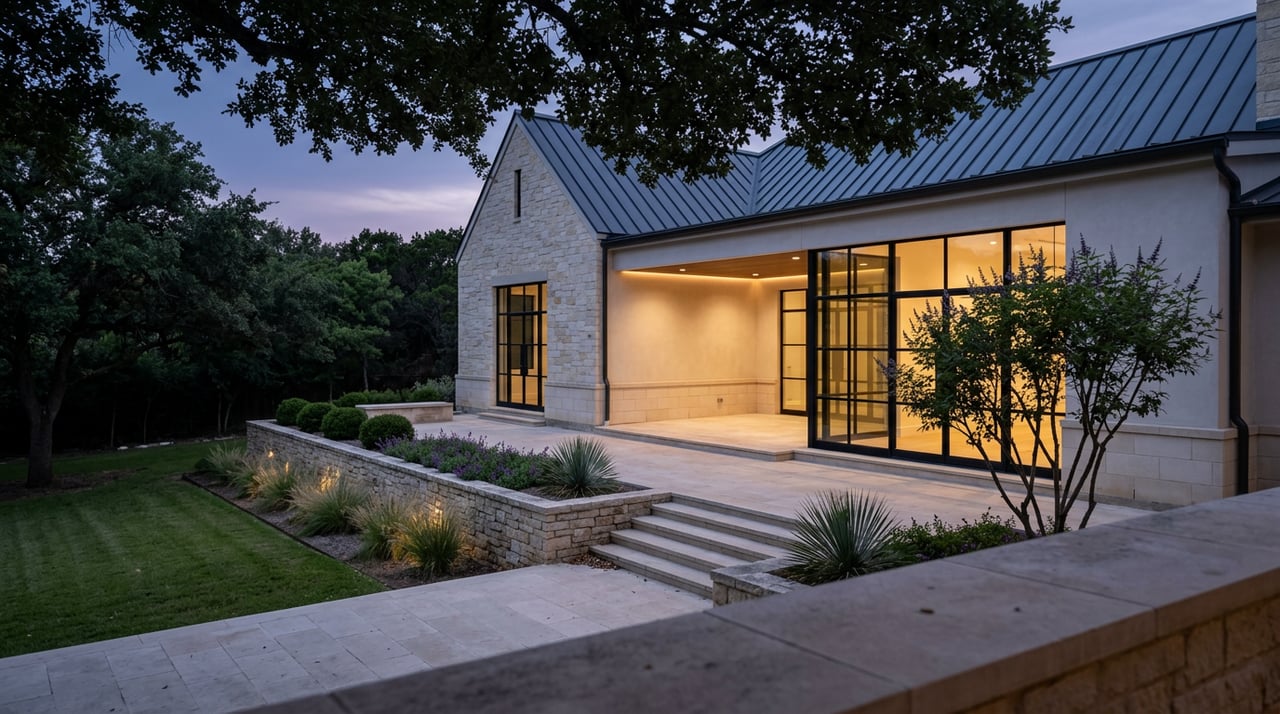
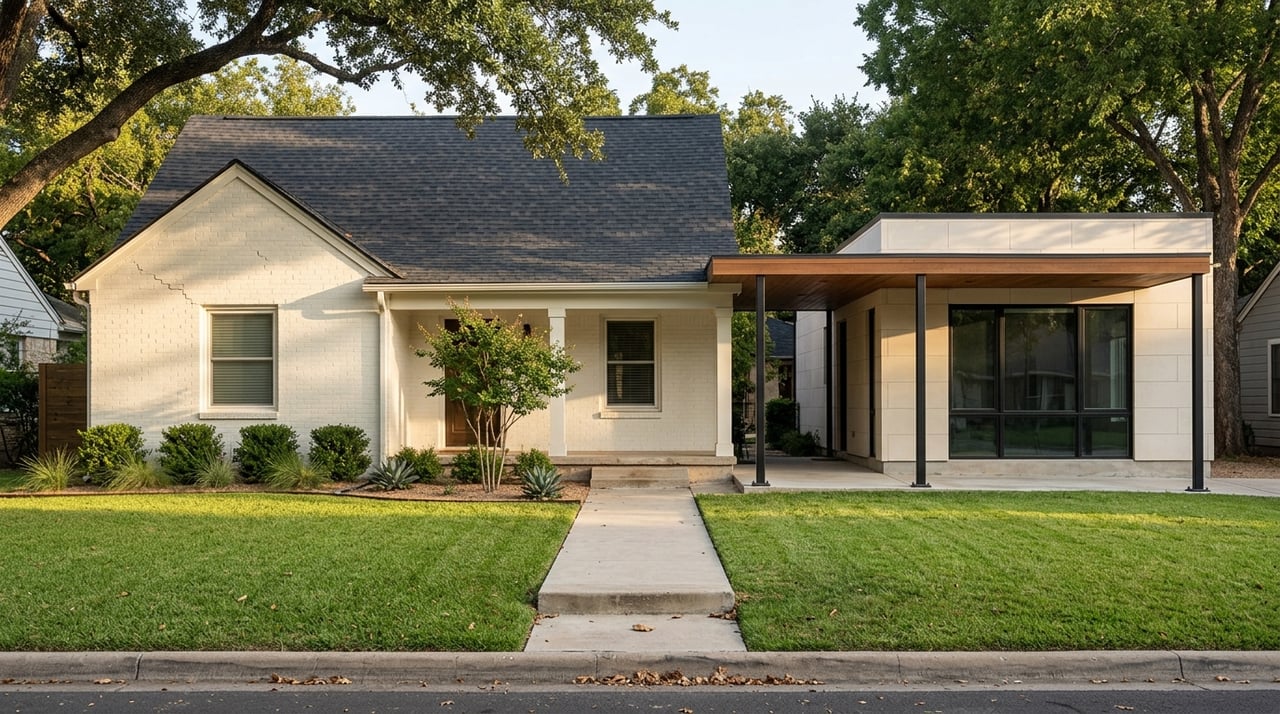
One of the most interesting things about Bryker Woods is that newer modern homes can fit without pretending to be historic. A 2022 AIA Austin Homes Tour project in Bryker Woods illustrates that approach. The home replaced a 1941 bungalow with a 2,040-square-foot single-story residence using brick and vertical cedar siding, a mix of gable and flat roofs, a central circulation spine, and a large skylight.
What matters is not that the house copied an older style. According to AIA Austin, the design aimed to respect the neighborhood’s historic scale while still feeling contemporary, efficient, and innovative.
That approach lines up with Austin’s Historic Design Standards. The city says new buildings in historic settings should take cues from nearby historic buildings while remaining clearly new, with compatibility judged through scale, massing, proportions, patterns, materials, and architectural features rather than exact style matching.
Compatibility Matters More Than Copying
In Bryker Woods, a successful modern home usually respects the block even if its design language is contemporary. If nearby homes are long and low, Austin’s standards note that new work should reflect those horizontal proportions.
That is an important point for both buyers and sellers. A modern home does not need to imitate a 1930s cottage to belong here, but it usually performs best when its street-facing scale and proportions feel consistent with the surrounding context.
What Buyers Should Notice
If you are shopping in Bryker Woods, architecture is not just about appearance. It also affects layout, renovation potential, and how a home fits into the broader neighborhood pattern.
Older bungalow, Craftsman, and Colonial Revival homes may offer strong curb appeal through porch design, roof form, and original window rhythm. Ranch homes may offer a more open interior feel and a stronger connection to outdoor spaces. Newer modern homes may bring updated planning and materials while still working within the neighborhood’s established scale.
As you compare properties, it helps to look beyond finishes and ask a few deeper questions:
- How does the home sit on the lot?
- How prominent is the porch or front entry?
- Does the roofline feel consistent with the block?
- Are the window patterns and proportions balanced from the street?
- Does the house feel modest, layered, or more expansive in a way that suits its surroundings?
These details often shape long-term appeal more than cosmetic updates alone.
What Sellers and Owners Should Keep in Mind
If you own in Bryker Woods, exterior changes are not simply a private design choice. Bryker Woods is part of the Old West Austin National Register Historic District, and the City of Austin says properties in National Register districts are subject to advisory historic review. The neighborhood association also describes its own historical review process for remodels and new construction, encouraging applicants to submit plans, elevations, and photos early in design.
That matters because some of the most common alterations in Bryker Woods involve siding replacement, window replacement, and porch alterations. Those changes can have a major effect on how a house reads from the street.
In practice, preservation-sensitive updates usually focus first on the features that shape neighborhood compatibility:
- Roofline and overall massing
- Porch depth and form
- Window rhythm and proportion
- Setbacks and street relationship
- Exterior materials
The key question is usually not whether a remodel looks old. It is whether the home still fits the block through scale, proportions, and its relationship to the streetscape.
Why This Matters in Real Estate
In a neighborhood like Bryker Woods, architecture affects value in a very local way. Buyers are often responding not only to the house itself, but also to whether it feels right for the setting. Infill that respects neighborhood scale, a well-preserved porch, or a thoughtful renovation can all influence how a property is received.
That is why neighborhood-level guidance matters. In a layered central Austin neighborhood, the most useful insight often comes from understanding the difference between a home that is merely updated and one that is truly well-positioned for its block.
Whether you are buying a classic cottage, evaluating a ranch home, or considering a newer modern build, Bryker Woods rewards a careful read of scale, context, and design continuity. If you want informed guidance on how a home fits the market and the neighborhood, connect with Jana Birdwell for a private consultation.
FAQs
What architectural styles are common in Bryker Woods?
- Bryker Woods includes bungalow, Craftsman, Colonial Revival, Minimal Traditional, and Ranch homes, along with newer modern infill designed to be compatible with the surrounding streetscape.
What makes Bryker Woods architecture feel cohesive?
- The common thread is usually not one single style, but compatible scale, porches, modest setbacks, open front yards, mature trees, and a strong relationship between homes and the street.
What should buyers look for in a Bryker Woods home?
- Buyers should look at rooflines, porch presence, window rhythm, lot placement, and how the home’s scale and proportions fit the block, not just interior finishes.
What should owners know before remodeling in Bryker Woods?
- Bryker Woods is part of the Old West Austin National Register Historic District, and exterior work may be subject to advisory historic review, with neighborhood character and compatibility playing an important role.
Can a modern home fit into Bryker Woods?
- Yes. Austin’s design standards support new homes that remain clearly new while taking cues from nearby historic buildings through scale, massing, materials, and proportions rather than exact style copying.